Context
ROLE
Worked with
Saxobeat, Creativit
Year
2025
Saxobeat isn’t just a band: it’s a high-end entertainment act for luxury weddings and corporate events.
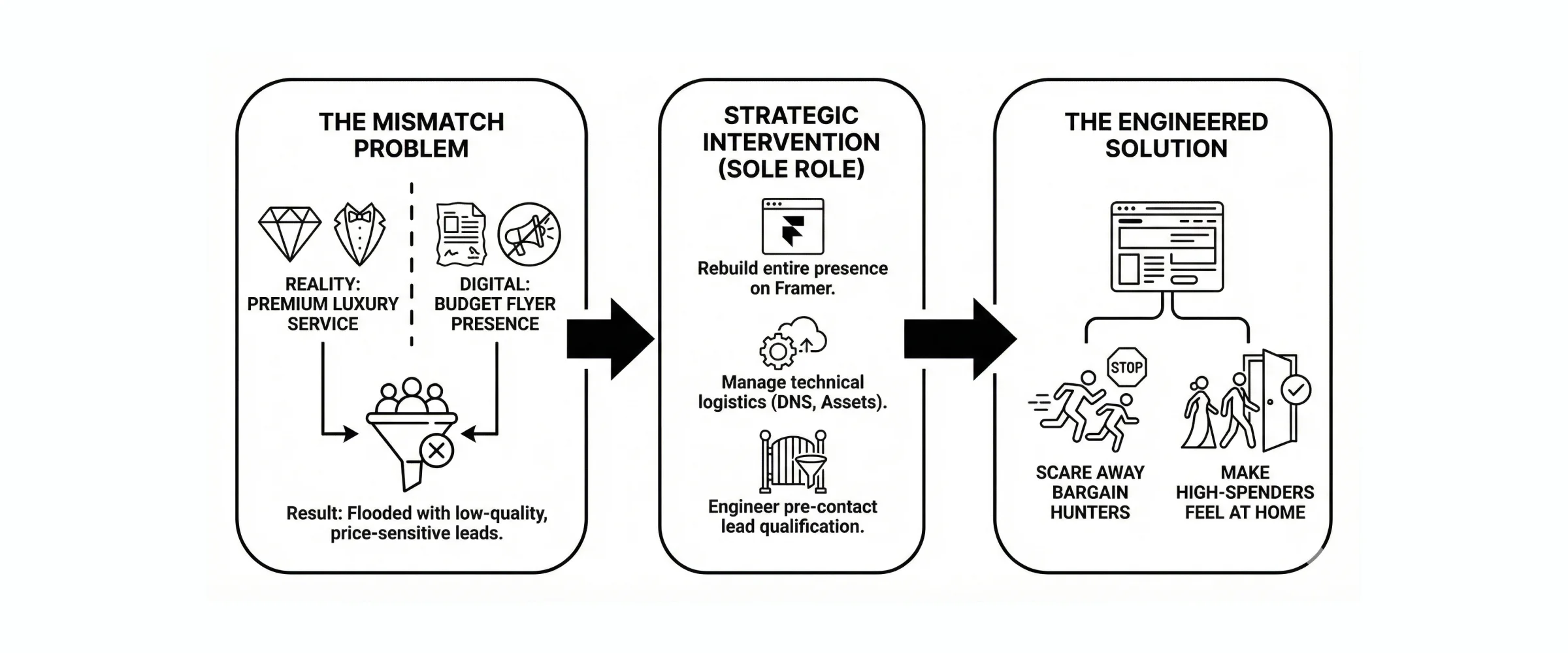
When they came to me in early 2025, their service was premium but their digital presence screamed “budget.” The site looked like a village party flyer: it technically converted, but mostly attracted the wrong crowd, low‑quality leads who ghosted or pushed back as soon as they saw the price.
While the agency Creativit was handling the visual identity, they needed someone to turn that rebrand into a digital experience that would qualify leads before they even hit the contact button.
I joined as the sole web designer and digital strategist to rebuild their web presence on Framer, manage the technical setup, and design a landing page that would filter out bargain hunters and feel instantly natural to high‑spending clients.
challenge
The brief was deceptively simple: "Make us look as premium as we actually are."
But the real challenge was strategic: how do you make a landing page earn a clearly above-average price tag?
The friction was social. Luxury services sell on trust, exclusivity, and "vibe." A generic page doesn't communicate any of that. We needed to:
Filter out low-intent leads – people shopping on price, not value
Qualify high-intent leads – people who understand they're paying for excellence
Balance exclusivity with usability – make it feel premium without making it confusing
I defined my own constraints:
Visual qualification – the design itself had to signal "high-ticket"
Human touchpoint – in an industry based on live performance, the site needed to feel alive
Scalability – as the business grew, the system needed to support multiple service tiers
Timeline: 6 weeks from kickoff to launch. I handled everything: strategy, design, build, DNS migration, email configuration, asset optimization.
process
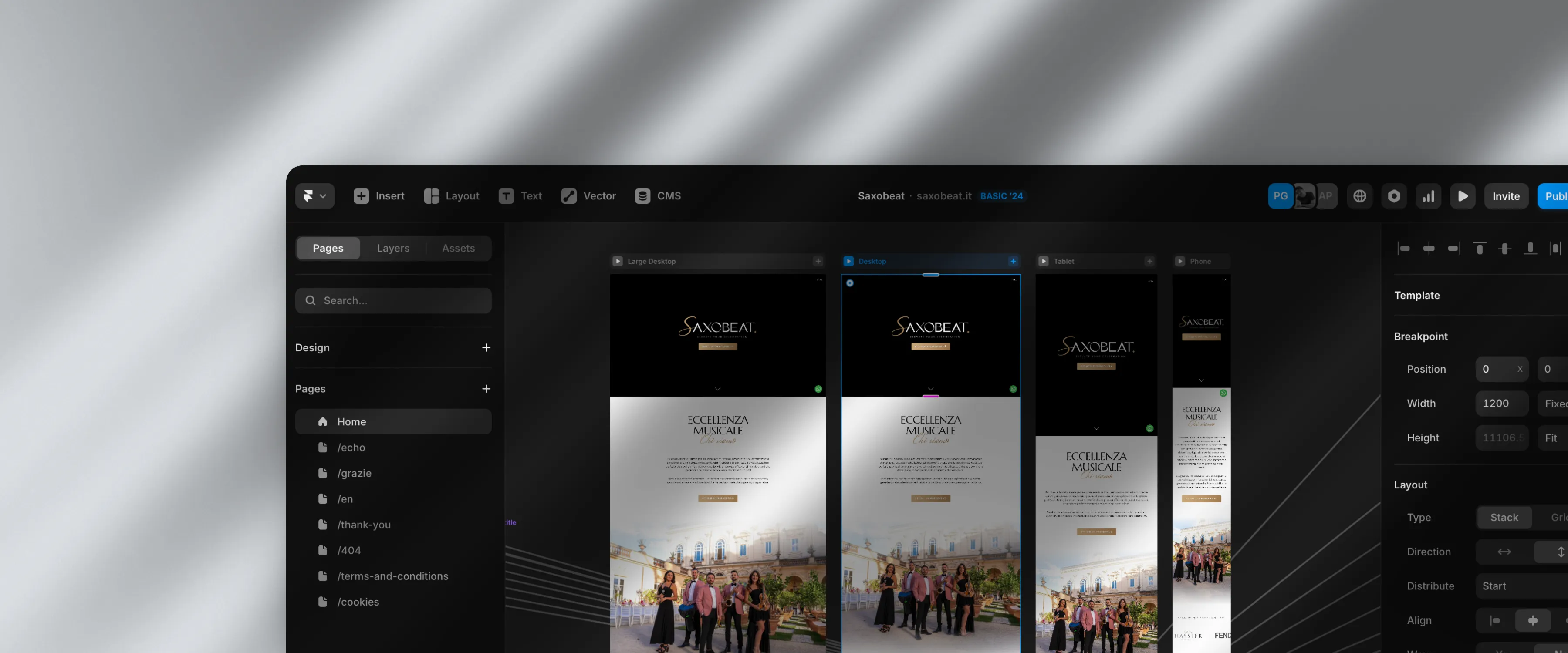
I moved the entire project to Framer for surgical control over storytelling and pacing.
Phase 1: Strategy & Asset Coordination (Week 1–2)
I worked closely with Creativit to align on positioning. They provided raw assets: video footage, photography, logo, color palette. But raw assets aren’t web‑ready. I optimized file sizes, reframed compositions for web layouts, and adjusted color grading to match the premium tone.
Phase 2: Information Architecture (Week 2–3)
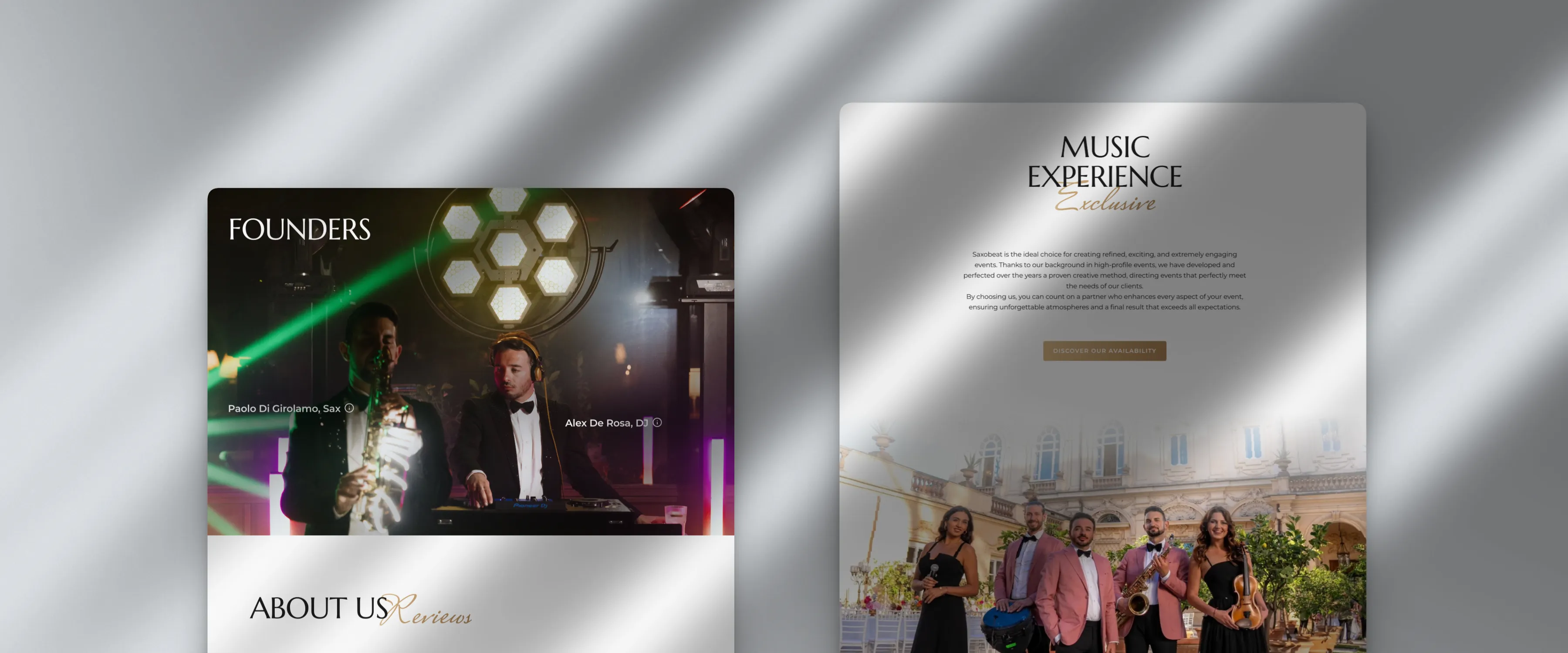
I intentionally moved away from loud, saturated colors and cluttered layouts. We used sophisticated typography, generous white space, and a restrained color palette to signal a high‑ticket status.
Phase 3: Build & Micro-Decisions (Week 3–5)
This is where strategic intuition came in. Midway through the build, I proposed integrating Facepop, a video widget in the bottom‑left corner showing a band member’s face. In an industry based on trust and vibes, seeing a human face and hearing a voice immediately bridges the gap between a cold screen and a live performance.
Phase 4: Technical Migration (Week 5–6)
I handled all backend logistics: DNS migration, email configuration, analytics setup. This wasn’t just a design project; it was a full web infrastructure overhaul.
I used Framer for design and build. No handoff, no dev team, full ownership.
Key decisions
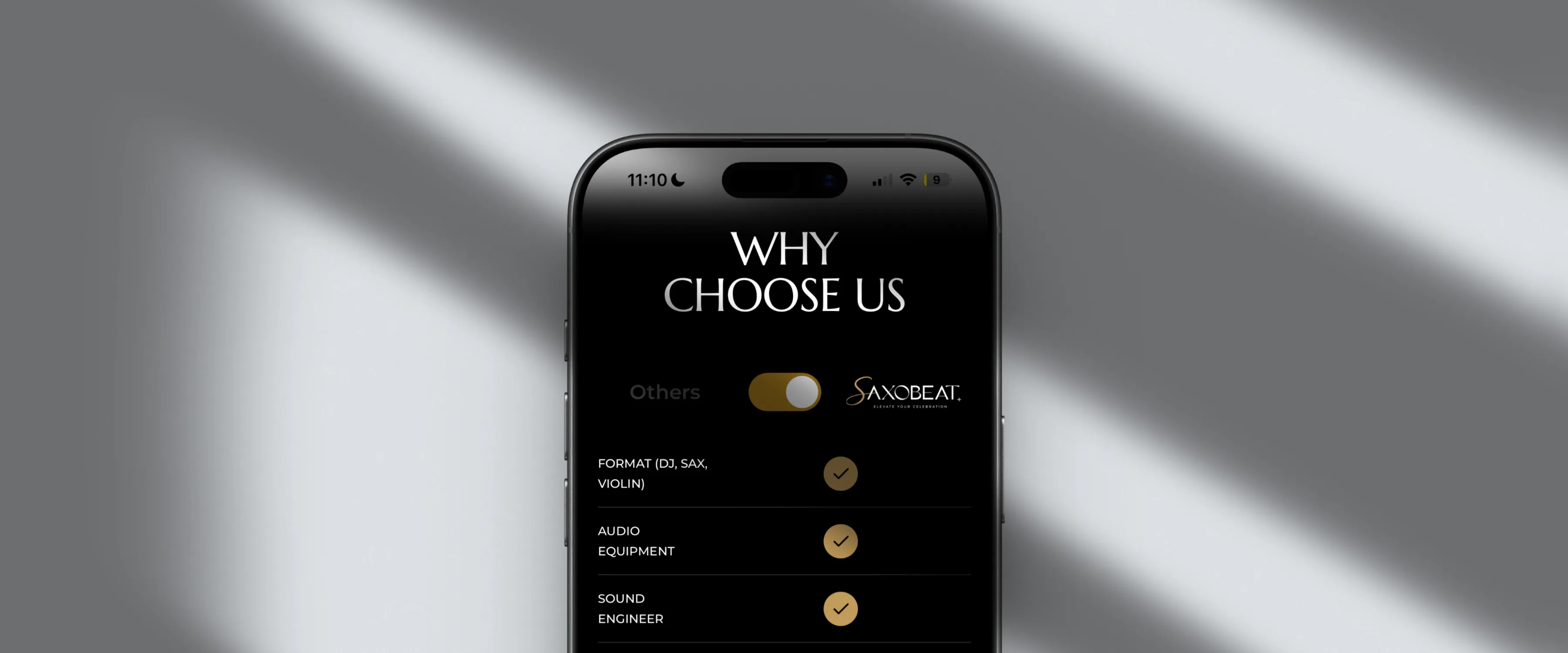
Visual Qualification (The "Premium" Filter)
I made a conscious choice to design for exclusivity first, conversion second.
This sounds counterintuitive, but here's the logic: it's easy to get leads. It's hard to get the right leads.
The old site converted, but it converted people who couldn't afford the service. The new site needed to filter before conversion. We did this through:
Sophisticated typography – elegant, restrained, no Comic Sans energy
Generous white space – luxury brands don't crowd the page
High-quality visuals – editorial photography, cinematic video, zero stock imagery
Subtle copy – we didn't shout "BEST BAND IN ITALY!!!"
This decision fundamentally changed the lead profile. We weren't optimizing for more leads (although in practice, the overall number of inquiries went up as well), we were optimizing for better leads.
The Facepop Widget (Human Touchpoint)
Midway through the project, I realized something was missing: humanity.
The site looked premium, but it felt distant. In an industry where people are booking performers and not products, that's a problem.
I proposed integrating Facepop, a video widget that sits in the bottom-left corner. A band member's face appears, you can hear a quick intro, and suddenly the site feels alive.
This wasn't in the original brief. It was an intuition that emerged during the build. The client loved it. More importantly, leads started mentioning it in their inquiries.
The Multi-Tier Strategy (Scalable Funnel)
As lead quality improved and bookings increased, a new problem emerged: we were turning away "mid-tier" clients who couldn't afford the top offer but could afford slightly above average prices.
I designed a "Second Battery" landing page: a separate funnel for a different tier of musicians. Same design system, slightly adjusted messaging, lower price point. This allowed Saxobeat to scale the business without diluting the premium brand.
Outcome
The new Saxobeat website launched in late May 2025. The results were immediate and measurable.
Key metrics (data from Google Ads, May - November 2025):
A 10.7% high-quality conversion rate from paid traffic
Cost per lead dropped from €8.50 to €6.45 (24% reduction)
Cost per click: €0.69 (well below luxury service benchmarks)
But the real impact isn't in the numbers, it's in lead health.
Before: Leads were price-sensitive, unqualified, and often ghosted after receiving the quote.
After: Leads are pre-qualified. They know they're contacting a premium service, so the conversion rate from lead to signed contract has more than doubled.
Business expansion: The success of the primary site allowed Saxobeat to launch an additional service tier, creating a scalable funnel for the entire company. What started as a website redesign became a business model shift.
Client feedback: The band now uses the site as a sales tool during client meetings. They pull it up on their phone and show it to prospective clients. The site itself has become part of the pitch.